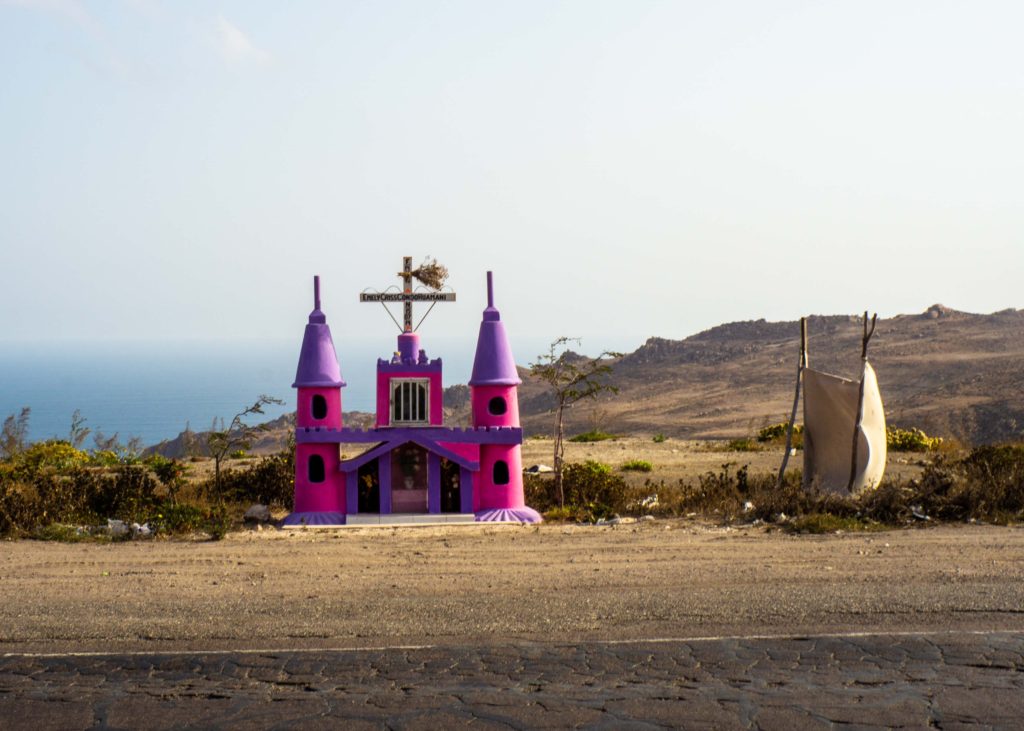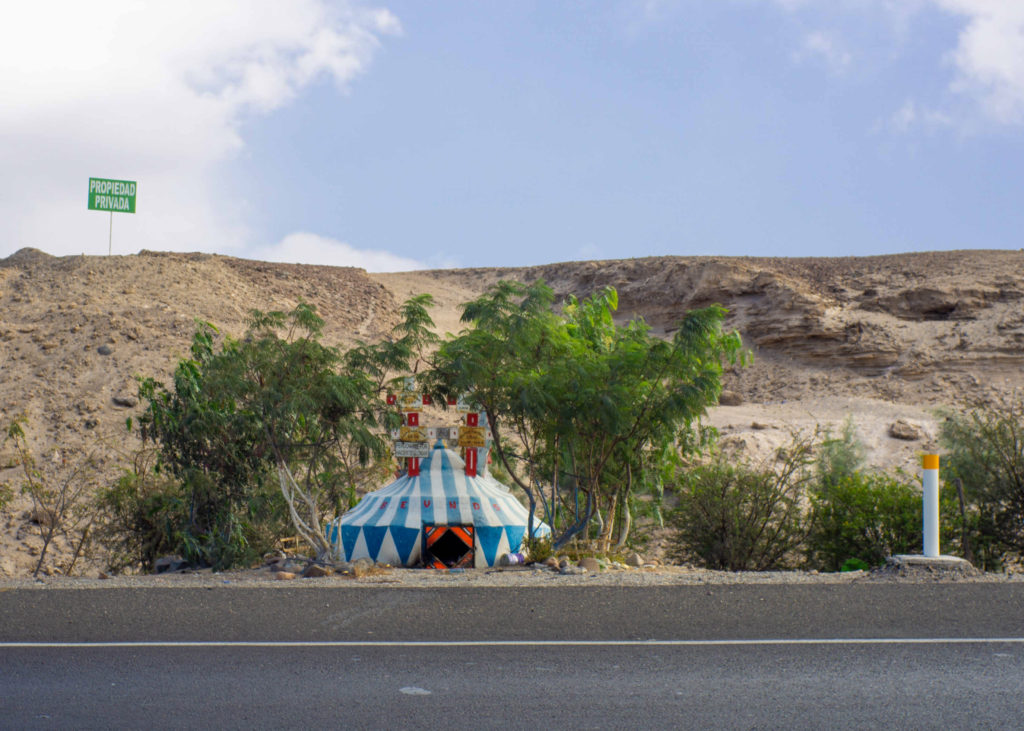
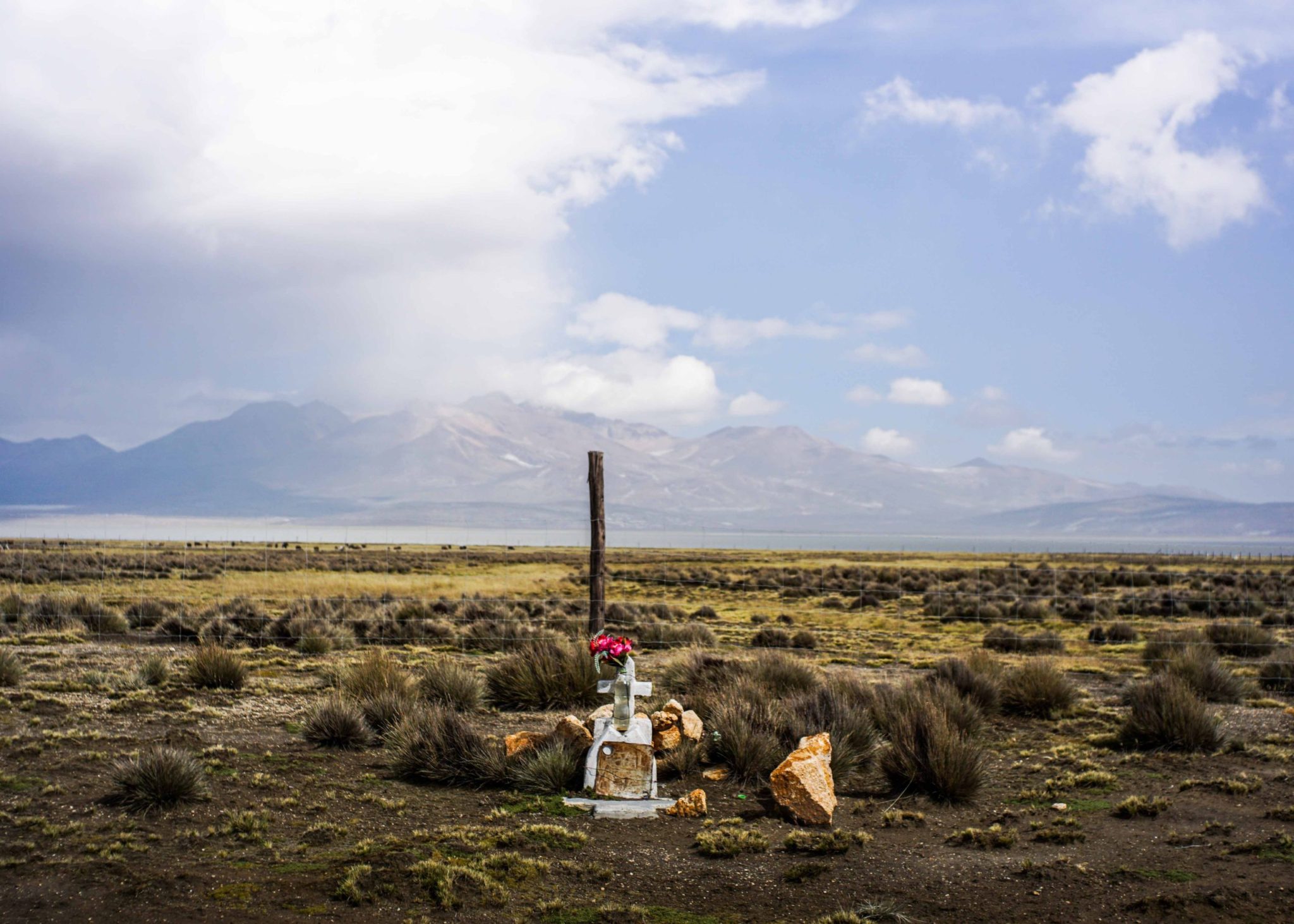
It is fair to say I became just a little curious about Peruvian funeral and burial traditions when documenting the series “Resting Place”. Having known little about any custom relating to funerary practices, seeing these roadside monuments certainly piqued my interest.
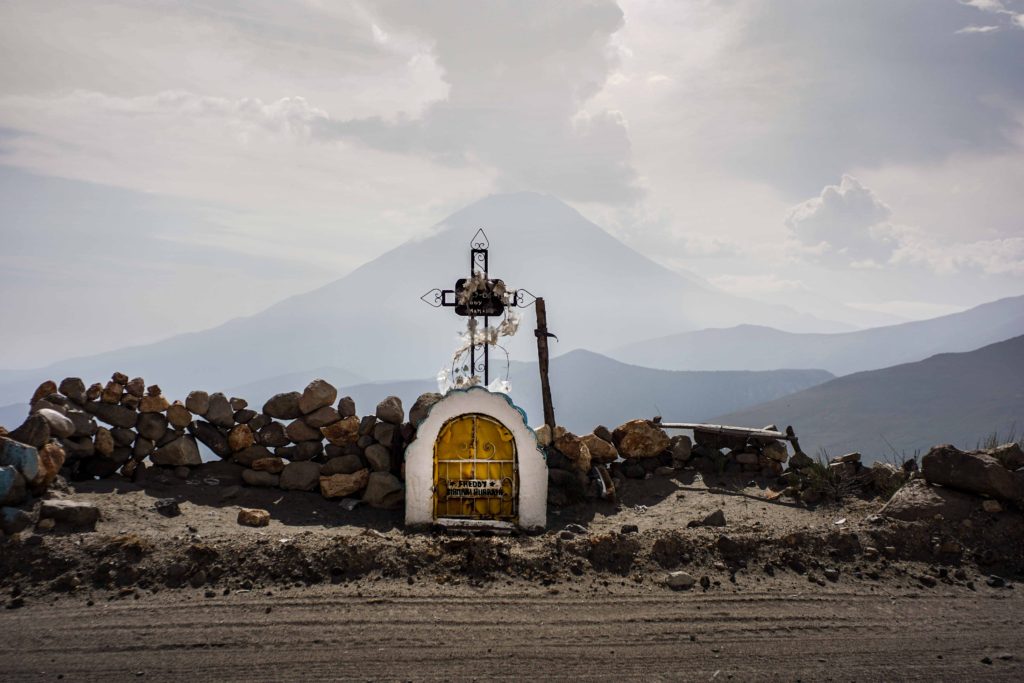
To uncover this hidden world, during which I was purely a respectful spectator, I had to watch from afar. As I documented each photograph, I became more and more interested in this practice of creating an elaborate roadside memorial for those who have lost their lives in traffic accidents.
At these roadside masterpieces, the family of the victim build a structure to commemorate their lost loved one. More intricate than some of the standard graves I have seen to date, these little houses, castles and doorways mark a tragic event in a colorful way.
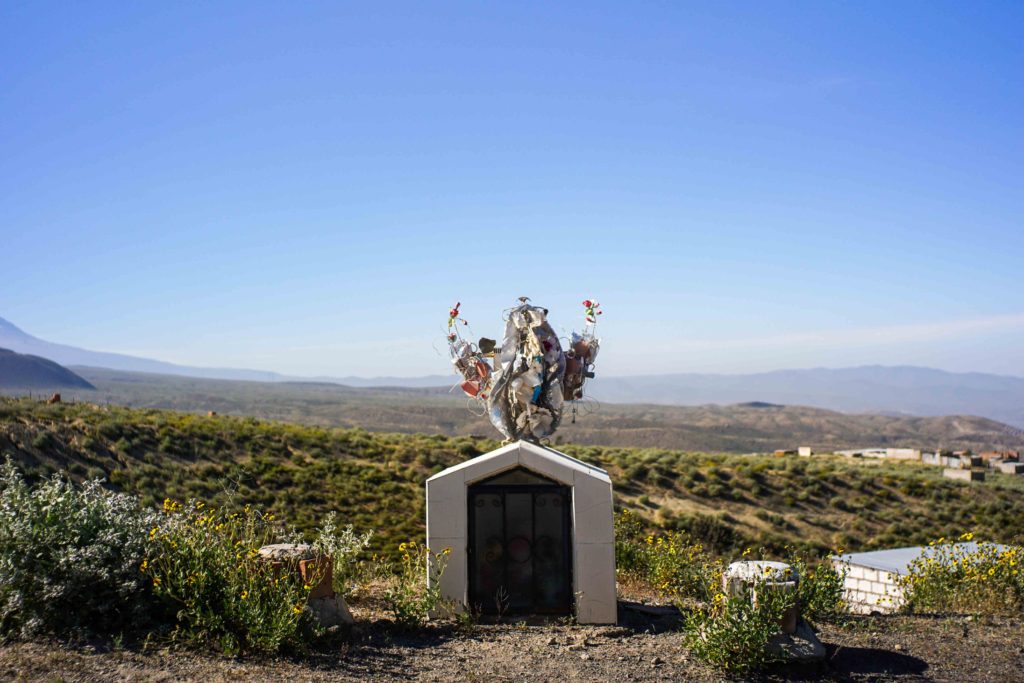
Prior to the erection of the memorial, the victim will be first honored in the traditional manner, as with a standard funeral. A few days in a casket – either in a church or in the home – whereby the family will tell stories and welcome visitors – will proceed the burial.
The burial ritual and funeral is nowadays likely to be conducted by a catholic priest, although some elements of traditional beliefs still prevail in certain areas. Historically, locals believed that the soul would fly away like a bird, and death would occur if it did not return to the body. For that reason, coffins were traditionally constructed in materials that would allow the soul to come back, if it so desired.
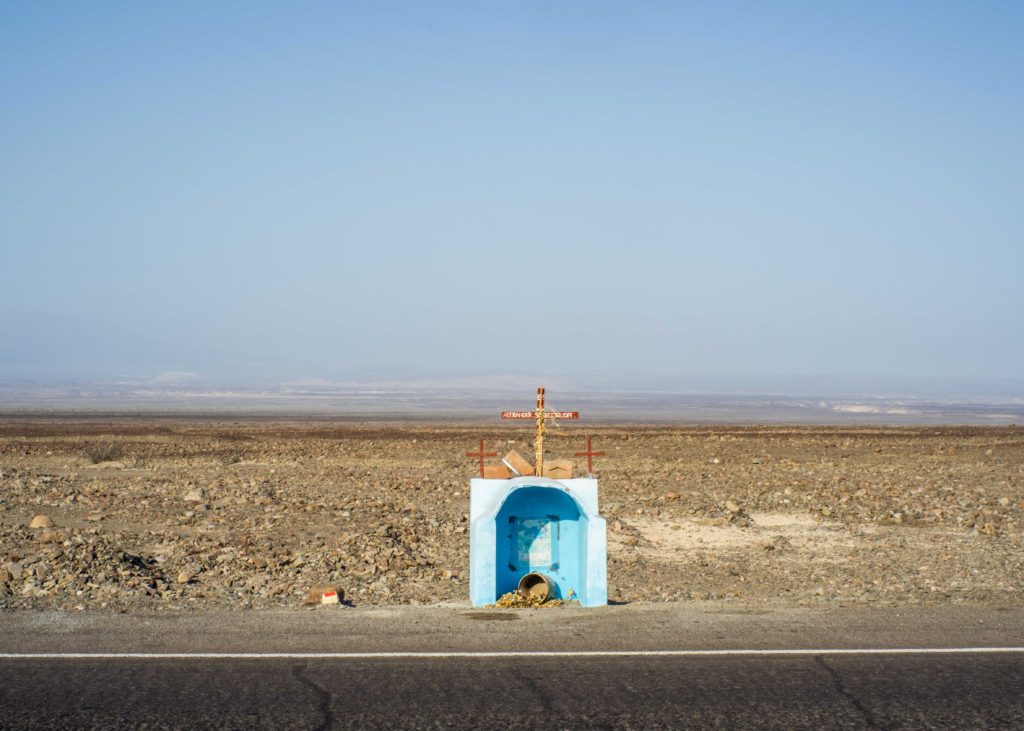
The tradition of depicting scenes from the person’s life on the headstone began in the Lima region and then spread throughout the country.
But back to the roadside monuments. If you have travelled anywhere by car in any country in the world, you are likely to have seen some markers of a fatal accident at some point. In Europe for example, it is not uncommon to see simple wooden crosses or fake flowers at the spot. Sometimes, daffodils and other recurring flowers will be planted so that there is an annual reminder of the accident.
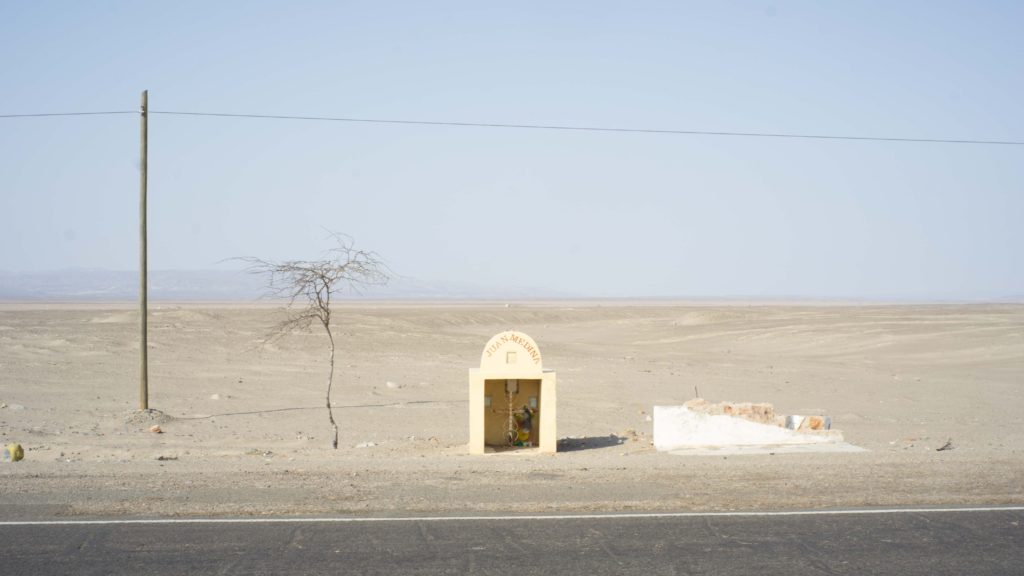
In Peru, the preference appears to be to build a more permanent structure, one that can withstand the tests of time. Light wooden crosses or lovingly placed flowers will blow away. Candles burn out, even those modern ones with batteries in the base.
No, in Peru you will see at the side of the road some of the most elaborate roadside structures around! My particular favorites are mini castles, houses and – in one example – a circus-tent like structure that really made me wonder about what the victim did for a living.
One thing did sit a little uneasy with me though. I worried for the family members who, after already having lost one member to the perils of Peru’s roads, set out to the very spot – often on blind corners or dangers slopes – to erect the memorial. I haven’t yet seen two memorials at the same spot though – so maybe I am worrying for nothing.